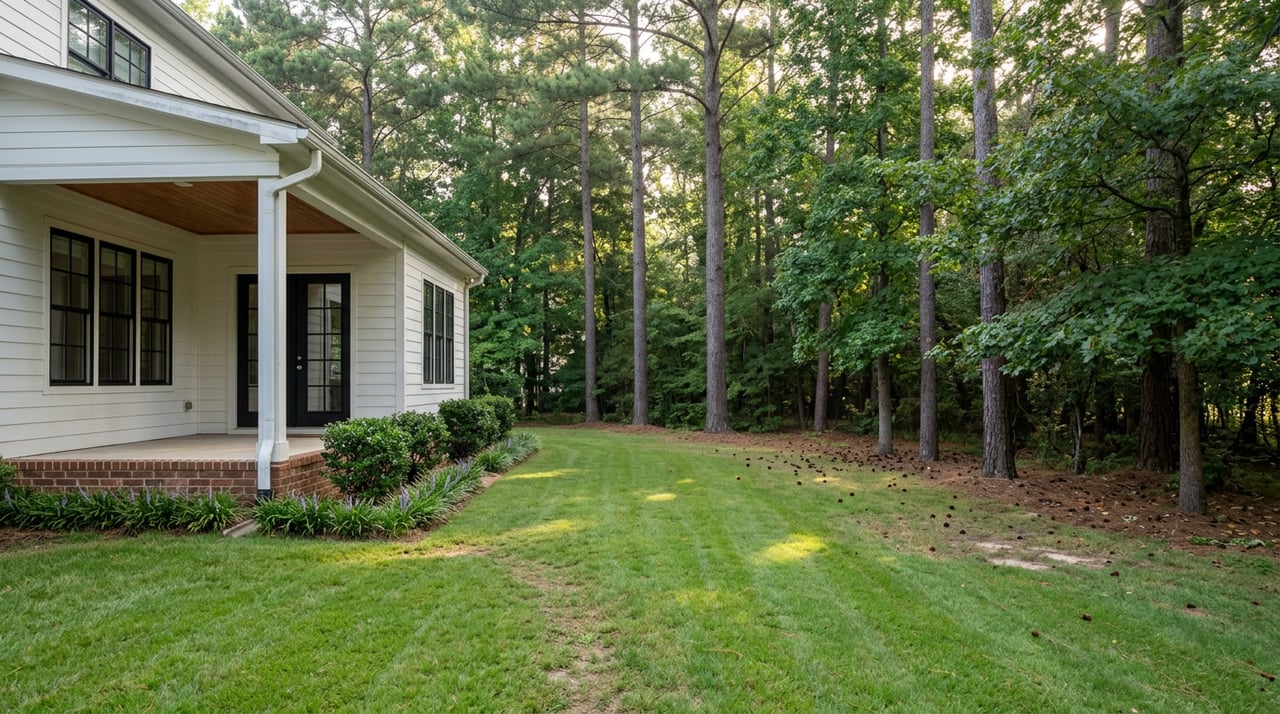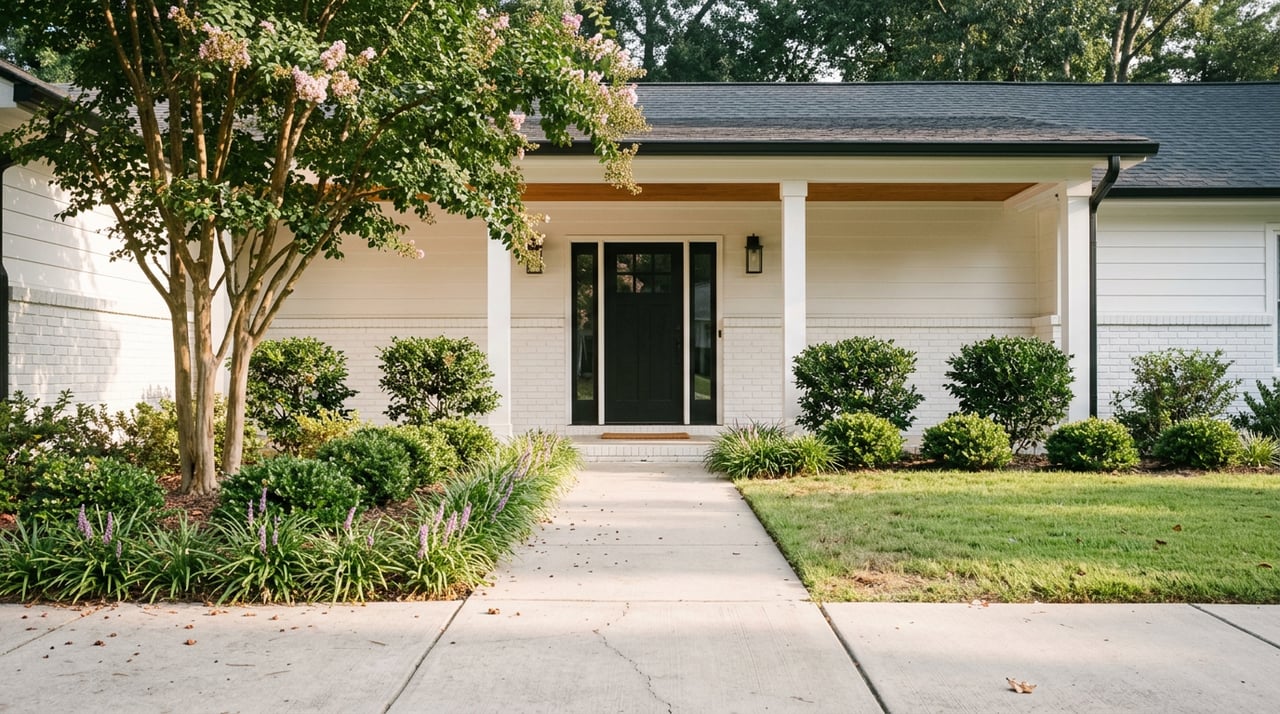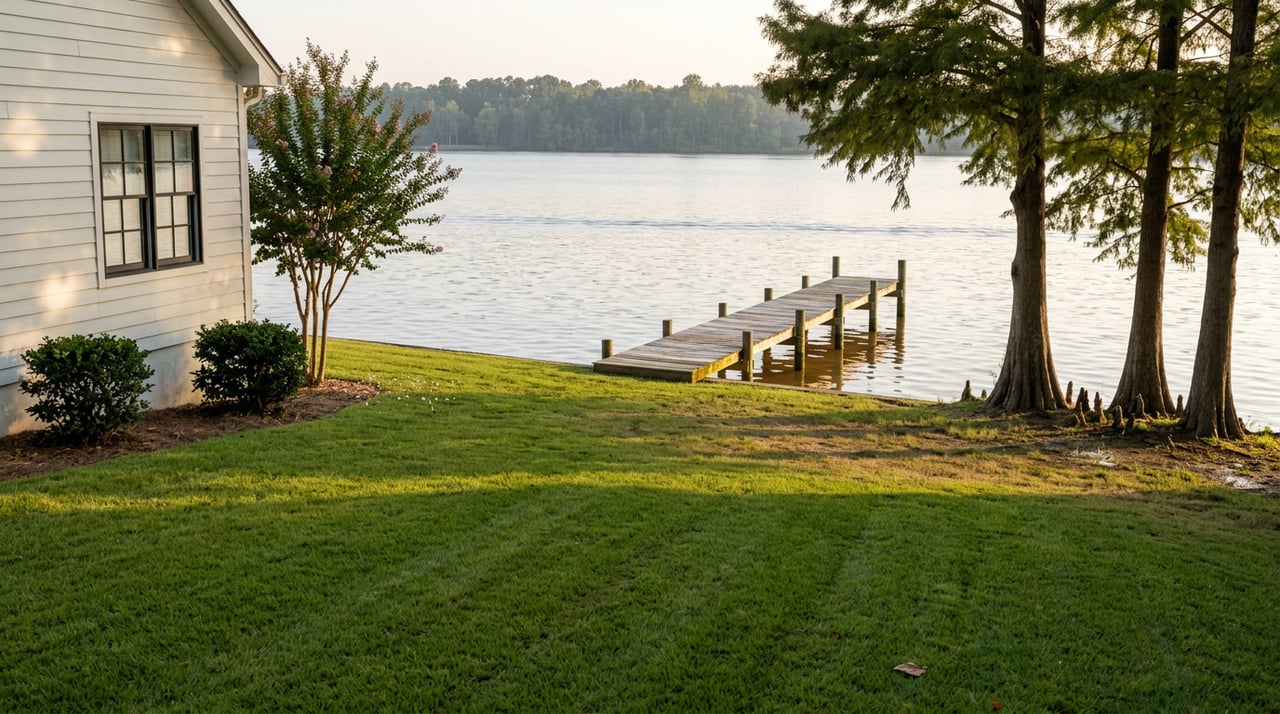
A buyer we'll call typical for this market found the house in April: three bedrooms, a screened porch, a sliver of water visible through the trees, listed as waterfront. The offer went in fast because everything else on the lake was moving fast too. Then, four days before closing, the title attorney flagged something in the survey. The lot was 68 feet wide along the shoreline. Dominion Energy's rule for a new residential dock permit is 100 feet. There was no existing dock, no grandfathered exception, and no way to get one approved before closing, or possibly ever.
That house was still waterfront. It was never going to be dockable. Those are two different words, and the gap between them is where a lot of Lake Murray money quietly changes hands.
The word doing the real work is "dockable," not "waterfront"
"Waterfront" describes where a lot sits. Whether you're allowed to put a dock in the water is a separate legal question, and Dominion Energy, which owns the lake and the land below the normal pool elevation, answers it through its Shoreline Management Program. The rule that matters most to buyers is a simple width requirement.
Before Dominion will even consider a new residential dock application, guidance published through Saluda County calls for a minimum of 100 feet of lot width along the lake's 360-foot contour, or 200 feet if the dock will include a boat slip.
There is a narrow exception. Lots between 50 and 100 feet wide can sometimes qualify for a limited dock if they were platted before 1989 and the neighboring lots already have docks in place. Outside that window, a narrow lot on the water is still a lot on the water. It just may never have a legal path to a private dock.
You can see this split show up lot by lot, not just neighborhood by neighborhood. At WhiteWater Landing in Chapin, one waterfront lot is marketed with the phrase "dock permit (dockable)" written directly into its listing, because the parcel clears the width threshold. Elsewhere on the lake, other waterfront lots carry the opposite disclosure printed right into the listing sheet: no dock permit allowed, even though the property touches the water. The difference between those two listings has nothing to do with the view and everything to do with a number on a plat.
What the rule does to price
Once you separate "on the water" from "able to have a dock," the pricing on Lake Murray starts to make more sense.
| Segment | Price point | Time window |
|---|---|---|
| Lake-wide waterfront listings, all types | Median asking price around $500,000 to $520,000 | Typical range across recent listing activity |
| Chapin-side, three-bedroom waterfront homes | Closed near $825,000 | Calendar year 2025 |
| Irmo/Chapin luxury shoreline segment (Area 20) | Median sale near $1.15 million, on 11 closings year to date, with active inventory down to 28 homes and sales pace up 83 percent year over year | MLS data as of early March 2026 |
That last row deserves a caveat before it deserves a takeaway. Eleven sales is a small sample, and a handful of closings under $900,000 or over $1.3 million can swing a median by a lot. What the number does tell you reliably is direction: inventory in that premium shoreline pocket was scarce and buyers were still paying close to full ask, at 93 percent of list price according to the same data.
The spread between $500,000 and $1.15 million is not mostly a story about square footage or finishes. Homes across that range can be similar in size. What separates them more often is water depth at the dock, whether the lot meets the width threshold for a permit at all, and which cove or shoreline segment it sits on. A buyer comparing two listings by price per square foot alone is comparing the wrong variable.
Where the split shows up on the ground
A few names on the lake make this easier to picture than a spreadsheet does.
Timberlake Plantation is the only community on Lake Murray built around its own golf course, and it comes with the reassurance of Timberlake Marina, which offers around 200 to 210 deep-water wet slips open to boat owners regardless of whether they live in the neighborhood. That matters because it decouples the boating lifestyle from the dock-permit question. You can own a home in Timberlake without a private dock and still keep a boat minutes away.
Autumn's Cay markets itself the opposite way from a true waterfront estate. It sells lake living through shared infrastructure, a community boat ramp, a courtesy dock, and boat storage, at a price well below what a private, dockable lakefront lot commands. For a buyer who wants Saturday mornings on the water without the carrying costs of a private dock, that trade can be the smarter one, not the consolation prize.
At the other end, Paradise Cove, Forty Love Point, and Turner's Point are the addresses that show up when buyers are specifically hunting for large lots with real shoreline and private docks already in place. These are the properties where the 100-foot or 200-foot width requirement was never in question, because the lots were platted with room to spare.
Before writing an offer on anything described as waterfront, a few questions can save a closing:
- What is the lot's frontage width along the 360-foot contour, and does it clear 100 feet, or 200 feet if you want a slip?
- Is there an existing dock, and if so, does its footprint match what Dominion has on file?
- If the lot is narrower and was platted before 1989, do the adjacent lots already have permitted docks?
- Is the property in a community with shared water access, like a courtesy dock or boat ramp, that makes a private dock unnecessary?
The permit follows the house, not the person
Here is the part that catches even experienced sellers off guard. A Lake Murray dock permit is tied to the property, not the individual who applied for it. When a home sells, the permit is meant to transfer with the deed rather than requiring the buyer to start over with Dominion.
That sounds simple until the dock itself has changed since the permit was issued. A boat lift added without an updated filing, a covered slip built past what the original sketch shows, or a dock rebuilt slightly larger than the decal on file all create the same problem: a mismatch between what Dominion has on record and what actually sits in the water. Buyers' attorneys are increasingly asking to see the permit documentation during due diligence, and a mismatch discovered close to closing is a common source of delay or renegotiation, not a rare one.
If you're selling a lake home, locating your Dominion permit file before you list is worth the hour it takes. If you're buying, asking for it before you're under a deadline is worth more than a dock inspection alone would tell you.
A few direct questions worth settling before you write an offer
Does a "lake access" listing come with any water rights at all? Not automatically. Some lake-access communities include deeded rights to a community dock or ramp, and others offer proximity without any legal access. Read the HOA documents, not just the listing description.
What if I close on a home and later find the dock doesn't match the permit? The permit stays tied to the property, and Dominion's compliance review happens at its own pace rather than on a closing timeline. A documented mismatch discovered after you own the home becomes your responsibility to resolve, which is exactly why confirming it beforehand matters more than it seems to at the time.
Can I add a dock later if my lot doesn't currently qualify? Only if the lot meets the width threshold Dominion applies at the time you apply, or if it qualifies under the pre-1989 grandfather provision. A lot that's too narrow today doesn't become wider later.
If you're comparing a true dockable lot against a lake-access community around Chapin, Irmo, or anywhere else along Lake Murray's north shore, the number on the listing is only half the picture. Phillip Jenkins has spent more than three decades reading the other half, the permit files, the survey widths, the shoreline classifications, that decide what a property actually lets you do with the water in front of it. If you want that read before you write an offer, or before you list, request your free home valuation and let's look at what you're really buying.